


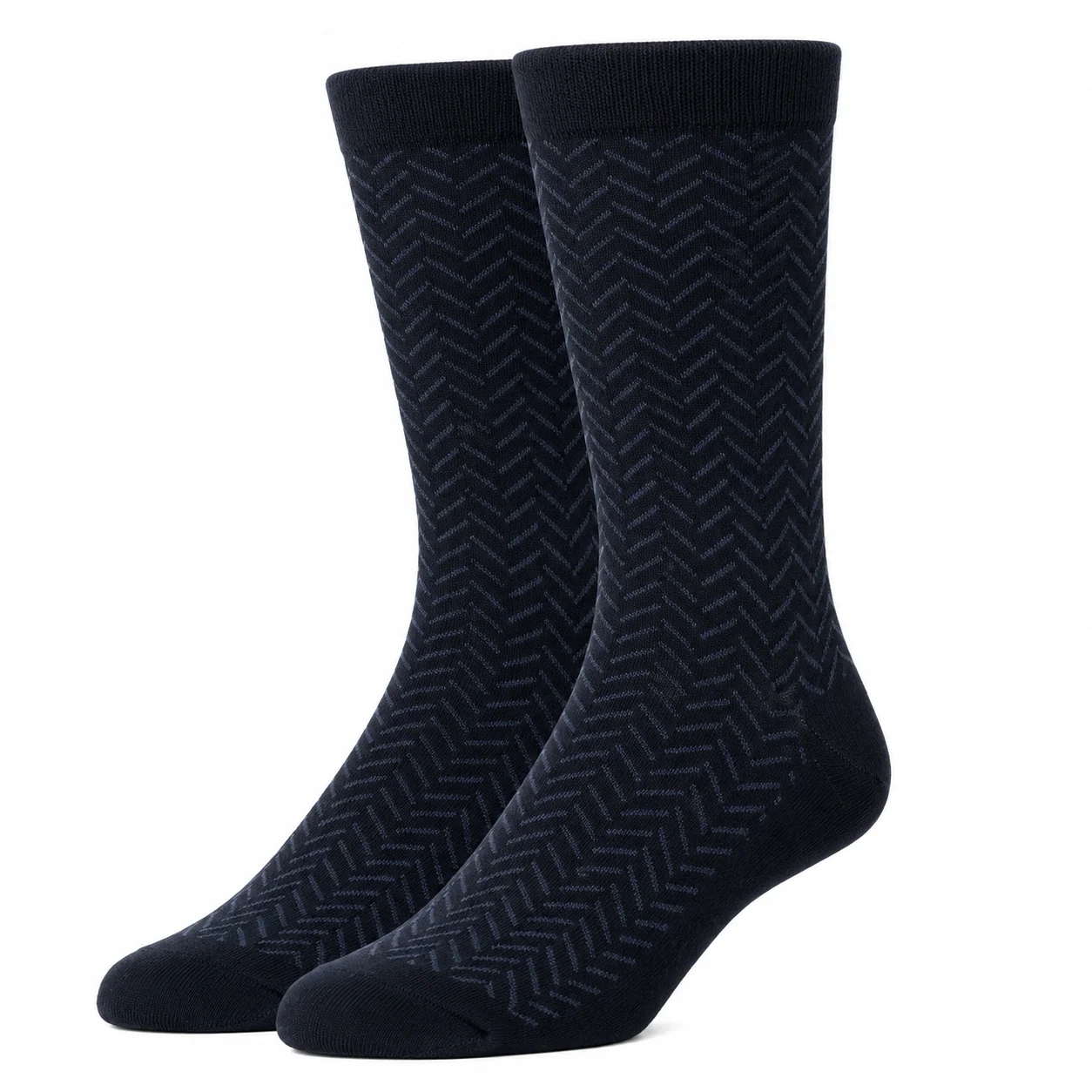
Walk into any boardroom and you will notice the same thing. The suits are tailored, the shoes are polished, and every so often, as a leg crosses, a flash of color or a fine pattern appears at the ankle. That quiet detail says a lot about the person wearing it. Dress socks are small, but they complete an outfit in a way few accessories can. For retailers, menswear labels, and gifting companies, they are also a smart product: low price per unit, high repeat purchase, and plenty of room for creativity. Getting them right, however, takes more than picking a nice pattern.
Why Quality Is Visible Even When Socks Are Hidden
Cheap dress socks reveal themselves quickly. They slip down the calf, bag at the heel, and thin out after a handful of washes. Customers rarely blame the sock. They simply stop buying that brand.
The difference starts with yarn. Long staple cotton, merino wool, and fine blends feel smoother and last longer than short fibers. A touch of nylon or elastane keeps the shape, while a mercerized finish gives cotton a subtle sheen that suits formal wear.
Construction matters just as much. A properly linked toe lies flat inside a leather shoe. A reinforced heel and toe extend lifespan. Ribbing that grips without pinching keeps the sock where it belongs through a long workday.
It is no coincidence that the best pairs are quiet. They disappear on the foot, and nobody thinks about them until a cheaper pair makes them wish otherwise.
Building a Collection That Moves Off the Shelf
Strong ranges balance reliability with a little surprise. Begin with essentials in navy, charcoal, black, and brown, since these sell year round. Then layer in seasonal patterns such as argyle, herringbone, pin dots, or subtle stripes.
Length is another decision. Over the calf is popular among professionals who dislike bare skin showing when they sit. Mid calf suits the broad market, and ankle styles serve warmer regions.
For brands that want to stand out, a manufacturer able to produce original designs makes all the difference. Companies that work with an experienced supplier of dress socks can adjust yarn, density, and artwork until the pair matches their identity, rather than settling for stock catalog patterns.
Do not neglect presentation. A set of three pairs in a slim gift box becomes an easy birthday or holiday present. Plain packaging, by contrast, makes the same product look like a commodity.
What Experienced Buyers Do Differently
Seasoned buyers share a few habits. They order samples in the actual sizes they plan to sell and test them with several foot shapes. They wash sample pairs repeatedly to check shrinkage. They examine seams under bright light to catch uneven stitching.
They also build relationships. A buyer who has spent years with one factory knows how it handles rush orders, color matching, and unexpected problems. That trust is worth more than saving a few cents per pair, especially during busy periods when delays cost real money.
One menswear founder described switching to a single supplier that handled knitting, labeling, and packaging together. Her lead time dropped by almost two weeks, and quality complaints nearly vanished because fewer hands touched the product.
The Road Ahead for Formal Legwear
Remote and hybrid work did not kill smart dressing, it just made it more selective. People now spend money on fewer, better items, and socks fit that pattern perfectly. Expect growth in natural fibers, recycled materials, and compact packaging that reduces waste.
Color will also stay bold. Younger professionals want personality in their wardrobe, and the ankle is a low risk place to show it. Brands that offer both classic and expressive collections are well positioned to capture both groups.
Conclusion
Good dress socks are the result of careful choices: quality yarn, honest construction, thoughtful design, and presentation that feels worthy of the product. For any business entering this category, the best investment is a manufacturing partner who understands those details and treats your brand as their own. Get that right, and a humble accessory can become one of your most reliable sellers.
FAQ
What fabric is best for formal wear? Fine merino wool and mercerized cotton are favorites, usually blended with a small amount of elastane for shape retention.
How many pairs should be in a gift set? Three pairs is common, since it offers variety without pushing the price too high. Single pair boxes work well for premium lines.
Can I request a unique pattern instead of a stock design? Yes. Many factories will develop custom artwork, match specific colors, and produce samples before you approve bulk production.
